
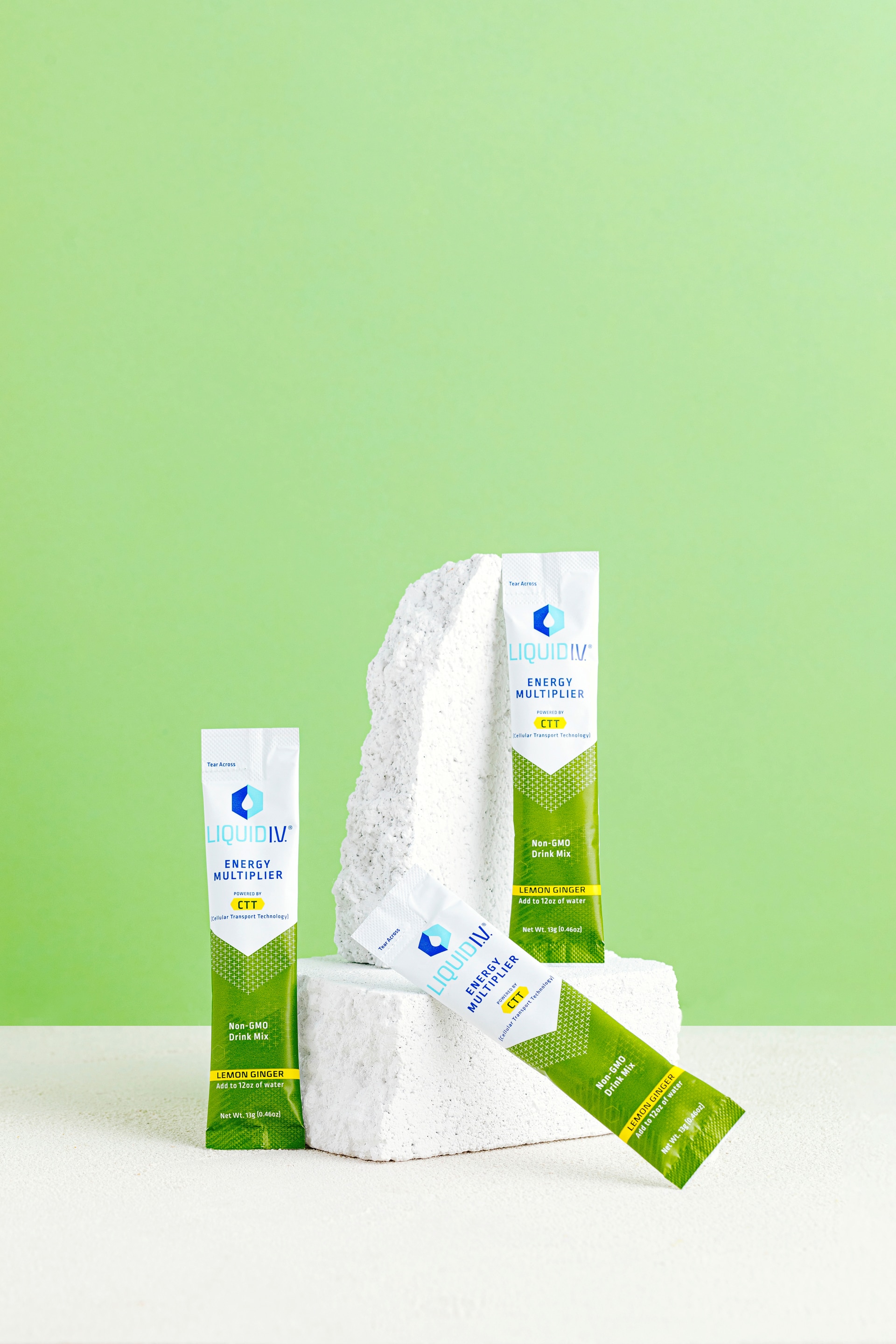
Intervention: Caffeinated Beverage + Carbohydrates and Electrolytes (CAF+CE, Liquid I.V. Energy), Caffeinated Beverage + Electrolytes (CAF+E, Prime Energy), Caffeinated Beverage (CAF, Celsius) or water. All participants (n = 28) completed the three active arms (CAF+CE, CAF+E and CAF) and the water arm of the protocol.
Study Duration: Four 250 mL aliquots administered over 30 min; urine collected at four hours.
Eligibility Criteria:
- Healthy adults (14 men, 14 women).
Tested Drink Composition
Here is how the tested drinks compare in terms of caffeine, electrolytes and carbohydrates:
Key Findings
1.
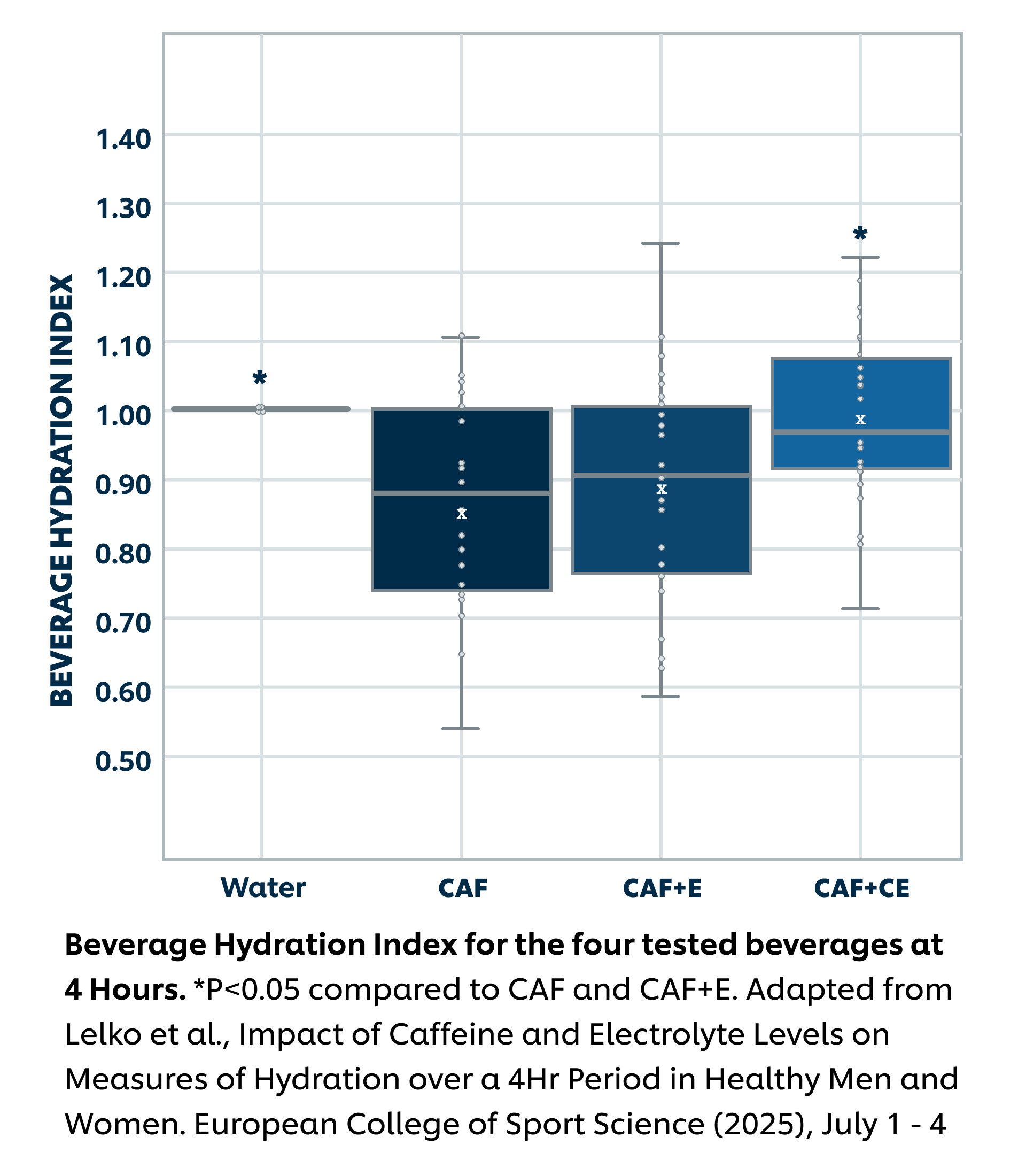
The Beverage Hydration Index (BHI) of CAF+CE was comparable to water, and significantly higher than CAF+E and CAF (P < 0.05 comparing CAF+CE to CAF+E and CAF).
2.
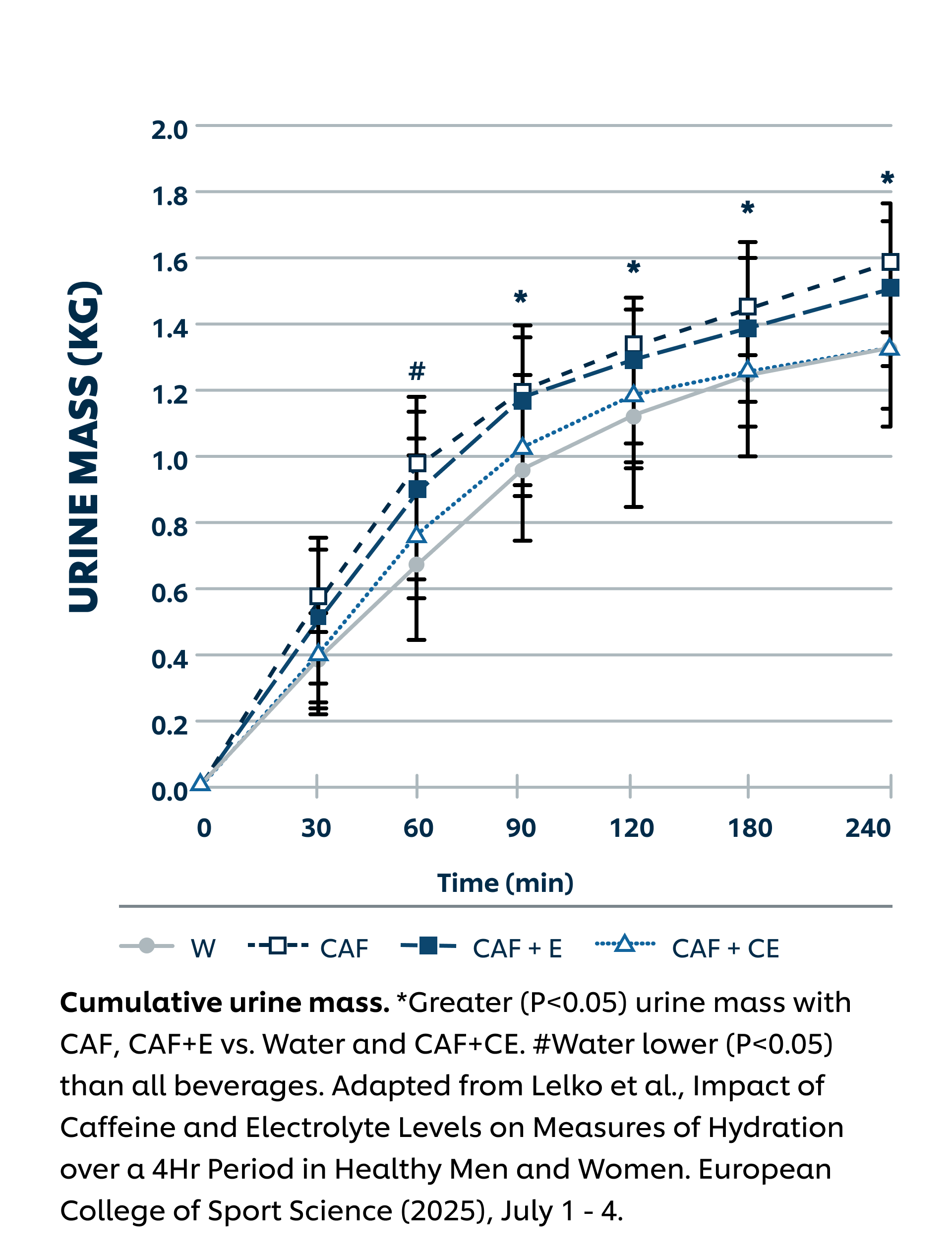
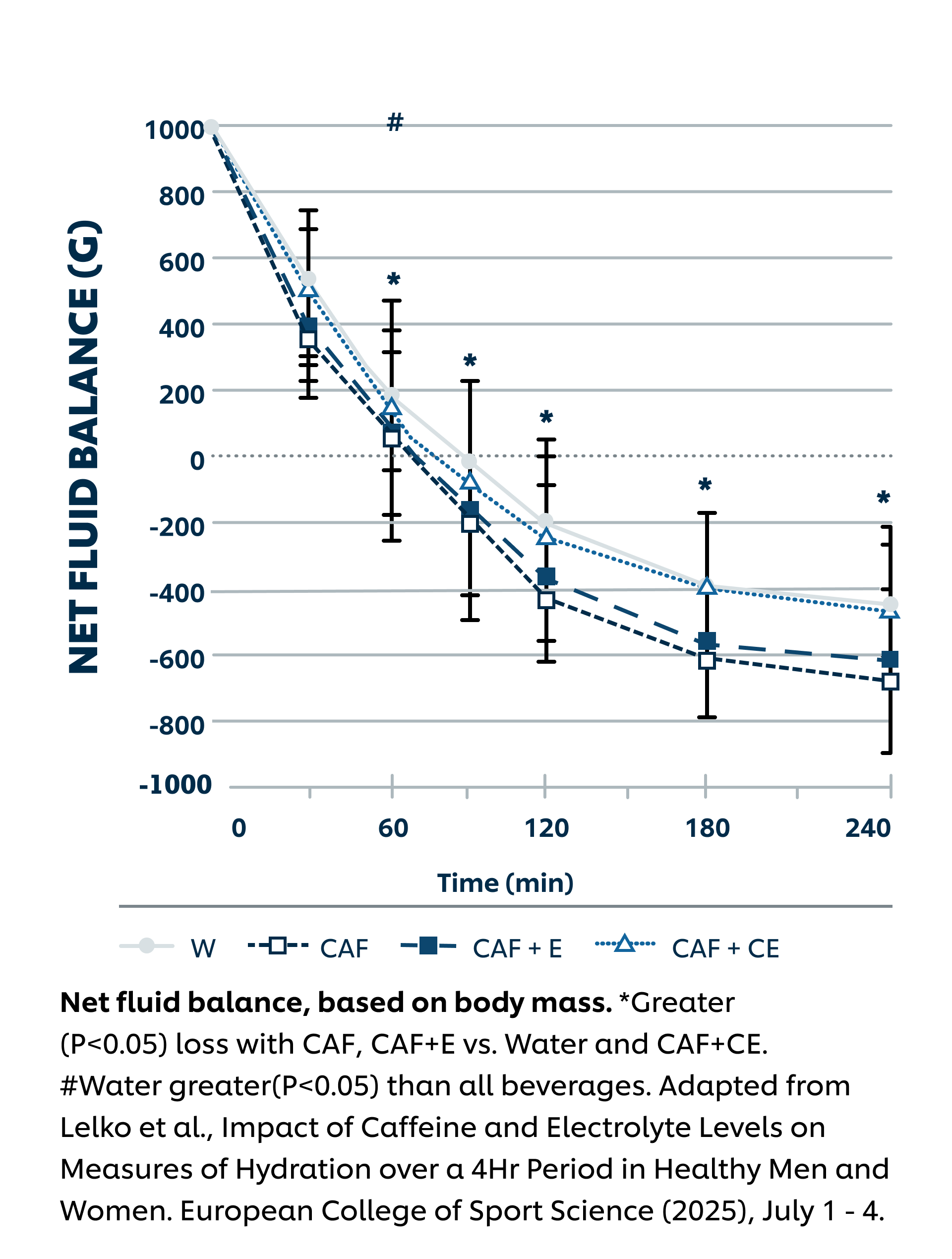
Compared to CAF+E and CAF, consumption of CAF+CE significantly reduced urine output over the 4-hour study period (P < 0.05 comparing CAF+CE to CAF+E and CAF). Furthermore, CAF+CE outperformed CAF+E and CAF on net fluid balance, with significantly greater water loss observed from the 90-minute timepoint onwards in the CAF+E and CAF groups compared to CAF+CE and water (P < 0.05).
3.
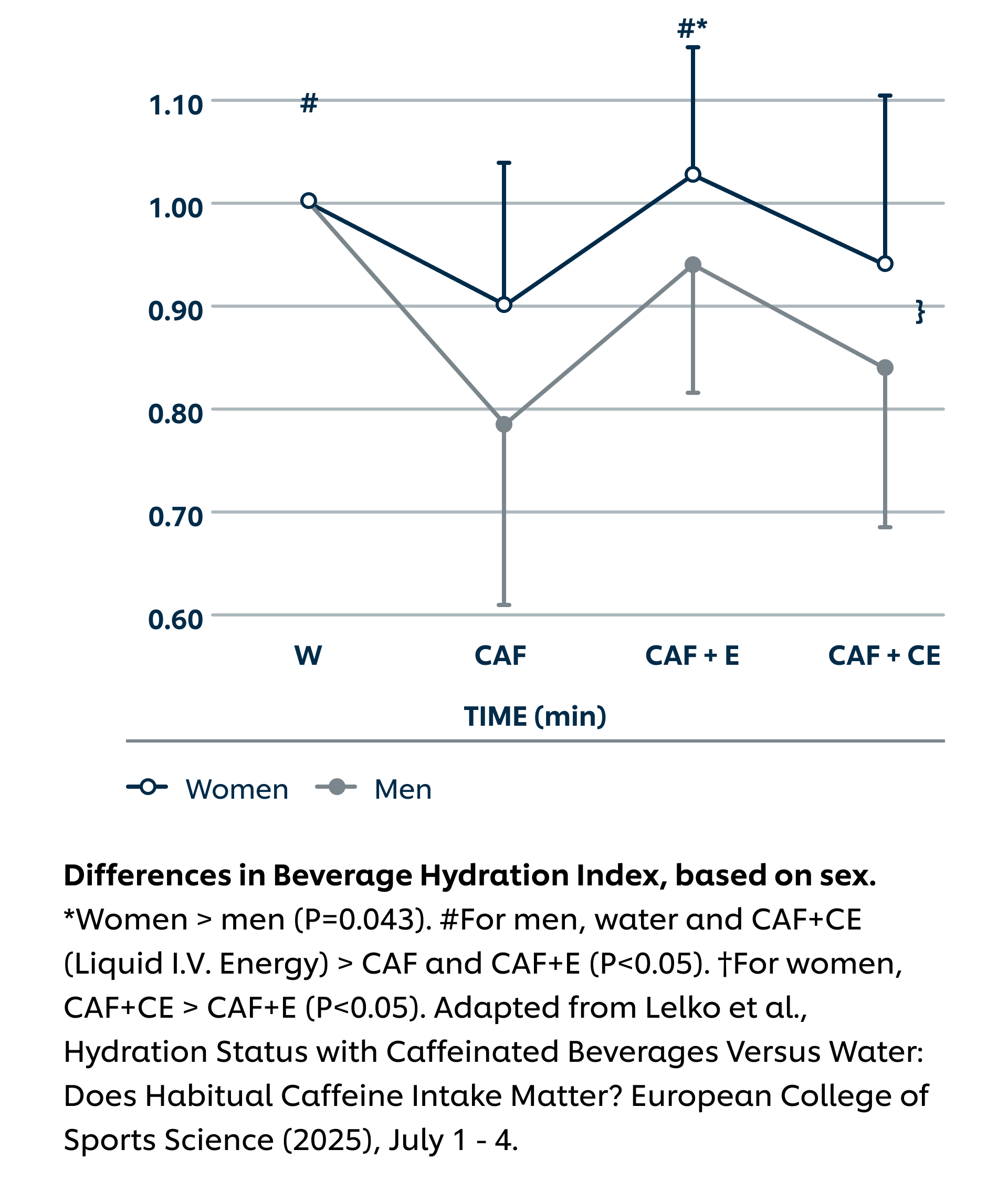
Interestingly, women in this study retained more fluid than men across all beverage conditions, suggesting a potential sex-based physiological difference in hydration response. This observation warrants further investigation to better understand sex-specific hydration strategies.
Download Poster
More research pages like this

- slide 1
- slide 2
- slide 3
- slide 4
- slide 5
- slide 6
THESE STATEMENTS HAVE NOT BEEN EVALUATED BY THE FOOD AND DRUG ADMINISTRATION. THIS PRODUCT IS NOT INTENDED TO DIAGNOSE, TREAT, CURE OR PREVENT ANY DISEASE.
This information is provided as a medical and scientific educational resource for the use of dieticians and other licensed healthcare professionals. This information is intended for Practitioners to use as the basis for determining whether to recommend these products to their clients. All recommendations regarding protocols, dosing, prescribing and/or use instructions should be tailored to the individual needs of the client considering their medical history and concomitant therapies. This Information is not intended for use by consumers.
What are you looking for?




© 2025 Unilever.
All rights reserved